
3 Signs Your Fabrication Shop Needs an Equipment Upgrade
Summary
- Your output has plateaued despite increasing demand and labor hours.
- Downtime is a weekly occurrence that is built into your scheduling assumptions.
- Your profit margins are being eaten by rework, scrap, and manual inspections.
- You are turning down high-precision jobs because your machines can’t meet the tolerances.
Table of Contents
Falling Behind Despite Full Schedules
your order books are full, the lights are on for two shifts, and the floor is buzzing, yet your actual output continues to lag behind your targets. When production schedules are maximized but the units out the door metric remains stagnant, the issue is rarely the workforce. It is almost always a capacity-alignment problem.
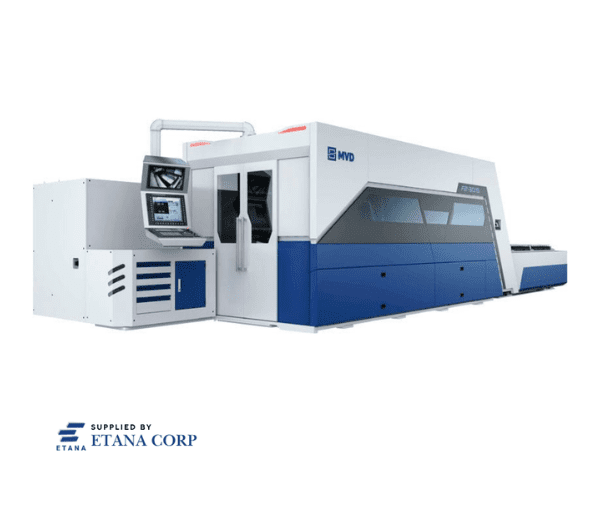
The Problem of Stretched Cycle Times
As fabrication technology evolves, the industry standard for cycle times shifts. A machine that was state-of-the-art ten years ago may still run perfectly, but its maximum velocity is now significantly lower than that of modern counterparts. To keep these older machines running safely and accurately, operators often have to dial back speeds. Over hundreds of jobs, these lost seconds compound into lost days.
Complex Setup and Changeover
Modern fabrication demands agility. If your current equipment requires hours of manual calibration for a simple changeover, you are losing billable time that your competitors (using automated tool changers or software-driven setups) are capturing. When setup time begins to rival run time, your equipment is no longer fit for a modern, high-mix production environment.
Key indicators of capacity misalignment
- Persistent Overtime: You are paying time-and-a-half not for extra growth, but just to maintain baseline requirements.
- Job Rescheduling: Complex jobs are pushed back because only one specific, older machine can handle them, creating a logjam.
- The Slow-Down Effect: Operators intentionally run machines at 70% capacity to avoid mechanical hiccups.
Normalizing Constant Machine Downtime
Downtime is the silent killer of fabrication margins. What begins as a nuisance, a blown seal here, a sensor error the, eventually becomes a predictable part of the week. This is known as the normalization of deviance, where a failure is so common that it is no longer treated as an emergency, but as an expected part of the process.
The Hidden Costs of Maintenance
When a shop is in this phase, the maintenance budget often skyrockets, but the machine’s reliability does not. You may find yourself stocking an extensive inventory of niche spare parts just to minimize the inevitable outages.
Cost Factor | Impact of Aging Equipment | Impact of New Equipment |
Repair Parts | High (often requiring custom or legacy parts) | Low (covered under warranty/standardized) |
Labor | High (specialized mechanics or long hours) | Minimal (routine preventative tasks) |
Opportunity Cost | Extreme (lost revenue during outages) | Negligible (planned maintenance only) |
Predictability | Poor (random failures) | High (IoT-enabled health monitoring) |
The Psychological Toll on Staff
Beyond the financial loss, frequent downtime erodes the morale of your shop floor. Skilled operators want to produce high-quality work; they do not want to spend their shifts waiting for a technician or nursing a temperamental machine. When downtime becomes predictable, your most talented employees may begin to look for shops that invest in the tools they need to succeed.
Managing Quality Instead of Controlling It
In a healthy fabrication environment, quality is a byproduct of the process. In a shop with aging equipment, quality becomes a manual, labor-intensive struggle. This is the difference between Quality Control (preventing errors through precision) and Quality Management (catching errors after they’ve happened).
The Hidden Factory of Rework
If you find yourself adding more inspection stations or hiring additional staff specifically for de-burring or re-aligning parts coming off a specific machine, you are running a hidden factory. This refers to the portion of your resources dedicated entirely to fixing mistakes that shouldn’t have occurred in the first place. As machines age, they lose their ability to hold tight tolerances. Bearings wear down, frames experience thermal drift, and control systems lose their responsiveness.
- High Scrap Rates: You are ordering 10% more material than necessary just to account for machine error.
- Operator Dependency: Only your most senior wizard operator knows how to trick the machine into cutting a straight line.
- Customer Rejections: Even with internal checks, parts are reaching customers that don’t meet modern precision standards.
Strategic Advantages of Modernizing
Upgrading is an investment in the future stability of your business. When you move from a maintenance-heavy posture to a production-heavy one, the benefits ripple through every department, from sales to the front office.
Stabilized Output and Forecasting
New equipment allows for lights-out or semi-automated manufacturing. This predictability means your sales team can promise delivery dates with 100% confidence. It removes the maybe from your production calendar, allowing for more aggressive growth strategies.
Reduced Manual Workarounds
Modern machines often combine multiple processes. A laser that also taps holes, or a press brake with automatic angle measurement, eliminates the need for secondary operations. By reducing the number of times a human has to touch a part, you drastically reduce the chance of human error and workplace injury.
Critical Features in New Equipment
When evaluating a potential upgrade, it is easy to get lost in the spec sheet. However, high-performing shops look for three specific categories of features that offer the highest return on investment:
- Software Integration: Can the machine talk to your ERP? Modern equipment should allow for seamless job importing, reducing the time spent at the machine interface.
- Adaptive Automation: You may not need a fully robotic cell today, but you should choose equipment that can be integrated with automation in the future.
- Remote Diagnostics: In the event of an issue, can the manufacturer log in remotely to fix a software bug or diagnose a part? This can turn a three-day downtime event into a thirty-minute phone call.
Overcoming the Delay Trap
The primary reason fabrication shops delay upgrades is the perceived risk of capital expenditure. It is a significant check to write, and many owners worry about the learning curve associated with new technology.
However, there is a Cost of Inaction (COI) that is often ignored. While the Cost of Investment is a visible number on a quote, the COI is an invisible drain on your bank account every single day. If you are losing 15% of your capacity to downtime and another 5% to scrap, you are already paying for a new machine, you just don’t have the machine to show for it.
The most resilient manufacturers act while they are still profitable and stable. Waiting until a machine has a catastrophic failure means you are making a buying decision under duress, which rarely leads to the best long-term outcome.
Conclusion
A fabrication shop is a complex ecosystem where people, processes, and technology must work in harmony. When the technology reaches its functional ceiling, the people and processes can only do so much to compensate.
Upgrading your equipment isn’t just about getting a faster machine; it’s about reclaiming the time, money, and morale that are currently being lost to inefficiency. By addressing these three core problems early, you ensure that your shop remains a leader in the industry, capable of meeting the demands of tomorrow’s customers.
faq’s
Does Etana Corp help with installation?
No, we are the direct suppliers of high-performance machinery. We provide the equipment and parts, but the buyer is responsible for their own machine installation and team training.
How do I know if my current fabrication machine is still worth keeping?
The machine can still meet future production demands. Ongoing maintenance costs are justified. Downtime and quality issues are acceptable long term. If output targets require increasing overtime, rework, or scheduling workarounds, the machine is often no longer cost-effective, even if it is technically operational.
What is the real cost of a fabrication machine beyond the purchase price?
- Maintenance and service costs
- Spare parts availability
- Downtime impact on production
- Energy and labor efficiency over time. This question is usually asked by owners and finance teams trying to understand the true cost of ownership over 3–5 years, not just the upfront investment.
How much downtime should realistically be expected?
- What level of downtime is normal in real operating conditions
- How quickly can issues be resolved
- Whether service support is reliable and accessible They are less interested in best-case scenarios and more concerned with worst-case operational impact.
Will this machine still work if our production volume increases?
- The machine can scale with increased demand
- Automation upgrades are possible later
- Capacity limits will be reached sooner than expected. It is often asked when buyers want to avoid replacing equipment again within a few years.
Muratec (Murata Machinery, Ltd.) delivers cutting-edge solutions across logistics, automation, machine tools, sheet metal machinery, textile systems, and communication equipment — driving innovation and quality to support industrial transformation.

Laguna Tools goes beyond machinery — we’re your partner in precision, productivity, and creativity. Our CNC routers and equipment deliver durability, accuracy, and craftsmanship to help bring your vision to life and grow your business.

Boschert Gizelis operates two privately owned factories and is dedicated to continuous R&D investment to deliver high-quality, technologically advanced sheet metal processing machines that meet the evolving industry needs.

Contact us
- (877) 235-6655
- info@etanacorp.com
- 500 N. Central Expy Ste.500 Plano, TX 75074